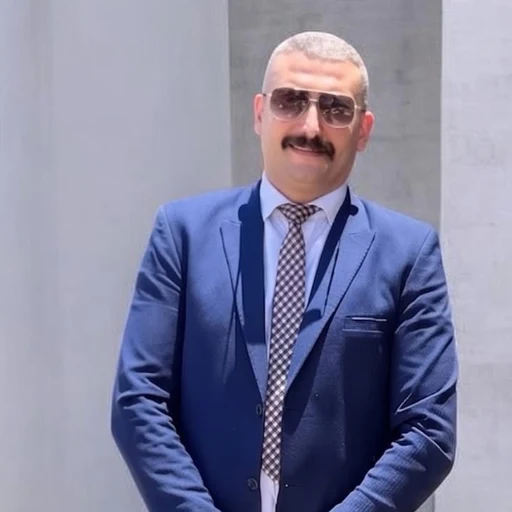

Before diving in, one distinction matters enough that I insist on it in every conversation: we run two entirely different customer paths. At NASEY — the custom software firm — I personally meet every prospective bespoke-project client before we sign. At Buy Egypt — the marketplace platform — a merchant registers themselves in minutes with no human intermediary. The decision to keep the two paths separate is not accidental. It is a deliberate design choice, and the reasoning is what this piece is about.
Why the Two Paths Are Different
NASEY sells a consultative, delivery-heavy service: a bespoke website, a mobile app, a full accounting system, a multi-vendor platform. Project value runs from 50,000 to a million-plus EGP. Relationship length runs from months to years. Every project is different — there is no template.
Buy Egypt is a packaged, standardized product: a merchant creates a store in minutes, picks a plan, starts selling. Subscription ranges from 149 to 1,999 EGP a month. No pre-signup consultation is needed. The experience itself is the sales pitch.
The gap between the two demands entirely different customer-acquisition architectures. The founder interview fits the first path. It would suffocate the second.
Why the Personal Interview Matters at NASEY
Background: what business school doesn't teach
The textbooks say "scale" means automation, and "professionalism" means removing the founder from daily transactions. That advice is partially correct — for mature markets where trust is anchored by contracts, courts, and durable digital reputations. It is only half correct in emerging markets, where trust is anchored on one thing: the face.
The problem in emerging markets
When an Egyptian founder signs a 150,000 EGP contract for a full e-commerce build with NASEY, she is not making a technical decision. She is making a trust decision. The market is full of stories: programmers who took a first payment and vanished; agencies that promised a month and shipped a year late; owners who discovered after delivery that the code was theirs but the server password was not.
Facing that background, the corporate line "we are professionals" is not convincing to a founder about to risk her life savings. What convinces her is looking into the eyes of the person taking her money, and letting her subconscious judge whether the human across the table is trustworthy.
The Arithmetic Behind the Interview (at NASEY)
Let us be honest with the math. A NASEY client interview takes one hour of my time. In a month, if I meet 50 prospects, that is 50 hours. On the surface, it looks like a productivity loss. But:
- Conversion rate from meeting to signed contract jumps from 20% (email path) to 70% (post-interview).
- Average contract value rises roughly 40%, because the client feels comfortable articulating what they actually need.
- Renewal rate after the first project rises from 30% to 85%.
- Referrals — a client who met the founder personally refers three times more people than one who did not.
Quick math: 50 hours a month equals 600 hours a year. But the return on those hours — measured against any alternative use of a founder's time — is a multiple higher. This arithmetic works at NASEY specifically because deal size is high and lifetime relationship is long.
The time I invest in the first meeting with a NASEY client repays itself across the following five years of the relationship.
Why We Do Not Apply This at Buy Egypt
Buy Egypt is a subscription platform with hundreds of new merchant signups per day. If I tried to meet each merchant personally, I would become the bottleneck to the platform's growth, not its catalyst. The economics of a standardized product are entirely different from the economics of a bespoke one.
So for Buy Egypt we built the opposite design: a simple signup flow, a 30-day free trial, comprehensive self-serve documentation, and fast text-based support. No interview, no intermediary, no human friction. The platform itself is the salesperson.
What I Look For in a NASEY Interview
1. Is the problem real?
Many founders don't know exactly what they want. They ask for "a store like Amazon" while meaning something much simpler. The interview surfaces the real problem, not the requested one.
2. Are the expectations reasonable?
If a client expects a full-service app built for 50,000 EGP that will generate a million a month, we should not take the project. We will disappoint her regardless of the quality of our work. The interview exposes those gaps early.
3. Is there human alignment?
We will work with this client for months, possibly years. If I sense the collaboration will be psychologically taxing, it is better to decline gracefully before signing. Time and mental health are worth more than a single contract.
4. Do we even need to take the project?
Sometimes in the interview I steer a client toward a simpler solution than what they asked for: a template instead of custom development, or even Buy Egypt itself instead of a full custom build. This advice costs me a contract. It earns me a lifetime relationship.
The Lesson for Small Companies
Decide the path before you decide the policy
The first question: are you selling a standardized product (SaaS, off-the-shelf store, packaged app) or a bespoke service (consulting projects, custom builds)? Each path has its own rules. Mixing them creates chaos.
Don't imitate the giants too early
Jeff Bezos does not meet every Amazon customer. Correct — but Amazon has 25 years of trust infrastructure to lean on. You do not. You must first build trust with your own effort, then gradually transfer that trust into a system that scales you.
Don't delegate the first 100 clients on a services path
On the bespoke services path, your first hundred clients are the foundation of your company. Know them personally. Understand their businesses. Learn from them. After the hundred, you will have accumulated enough knowledge to design systems that scale without hollowing out the core.
Turn the interview into a marketing edge
When the market knows the founder of a services firm meets every client personally, that fact becomes a differentiator. Competitors cannot copy it — their founders do not want to, or their firms have grown beyond the founder's capacity. Your smallness becomes an advantage.
The Takeaway
Automated systems scale SaaS products like Buy Egypt — that is correct and required. But they do not substitute for the human face on NASEY's bespoke work. The first hundred consulting clients need your face, not your ticketing system.
The lesson is not "meet every customer personally." The lesson is understand what kind of customer sits across from you, and design the acquisition path to fit. That understanding is the difference between a company that grows intelligently and a company that exhausts its founder for no reason.


Comments(0)