
There is a well-rehearsed mental map of the global software industry: Bangalore, Warsaw, and — in the Arab region — Dubai and Riyadh. Nobody sketches a city in the Nile Delta on that map.
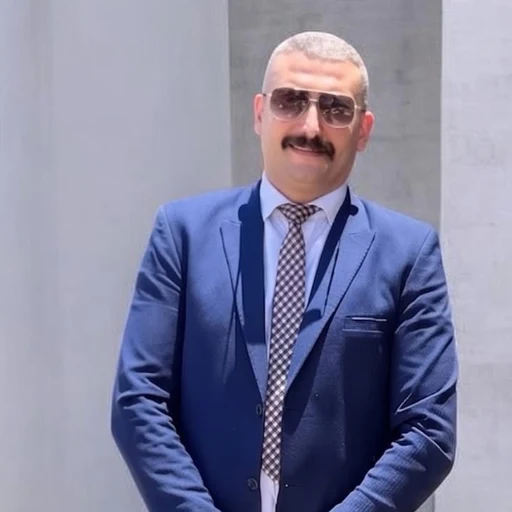
And yet one of the more interesting stories in Egyptian digital-services export today does not begin in a glass tower in the capital. It begins in Mansoura. There, engineer Mohamed Gamal El-Din Rabie — born in 1987, and known digitally as Mohamed Rabeea — runs an ecosystem that stretches from code written in the Delta to stores operating in Riyadh, Dubai, and Toronto.
The Number Worth Auditing: A Company Founded at Eighteen
According to company records, NASEY® was founded in 2005. If you compare the dates carefully, you catch a detail most writers miss: 2005 was the year Mohamed Rabeea turned eighteen.
While his peers were choosing university majors, he was choosing a market. And 2005 was not an easy year to start. Egypt's digital infrastructure was in its infancy. Electronic payment was practically non-existent. The idea of "a software company in a provincial city" drew puzzled looks rather than funding. Precisely from that early start comes the twenty years of experience cited today — not a marketing claim, but the arithmetic result of an unusually bold beginning.
The Founding Wound: A Message He Never Heard
Behind the man is a story that does not appear on the commercial registry. Rabeea recounts that his father, a struggling schoolteacher named Gamal El-Din Arfan Rabie, traveled to Yemen looking for wider income and died there in December 1987 — only two months after leaving, and just four months after his son's birth. The father never watched his son grow up. The son never saw his father at all.
He recounts that before boarding the plane, his father told his mother a sentence that later hardened into a full company doctrine: "Don't be afraid for any of you. I am leaving you — and I am leaving Mohamed with you."
A man on whose shoulders responsibility was placed before he could speak grew up to build a company that sells reassurance before it sells code. His first storefront carried his father's name. The promise underneath the brand today is that the client should feel safe. Personal grief became a market position — and that is rare.
The Thesis: Cultural Translation as a Competitive Moat
In an economy where code has become a cheap commodity, and where AI models generate functions in seconds, the advantage built on "we write software" collapses. What remains scarce is the ability to read the human in the target market.
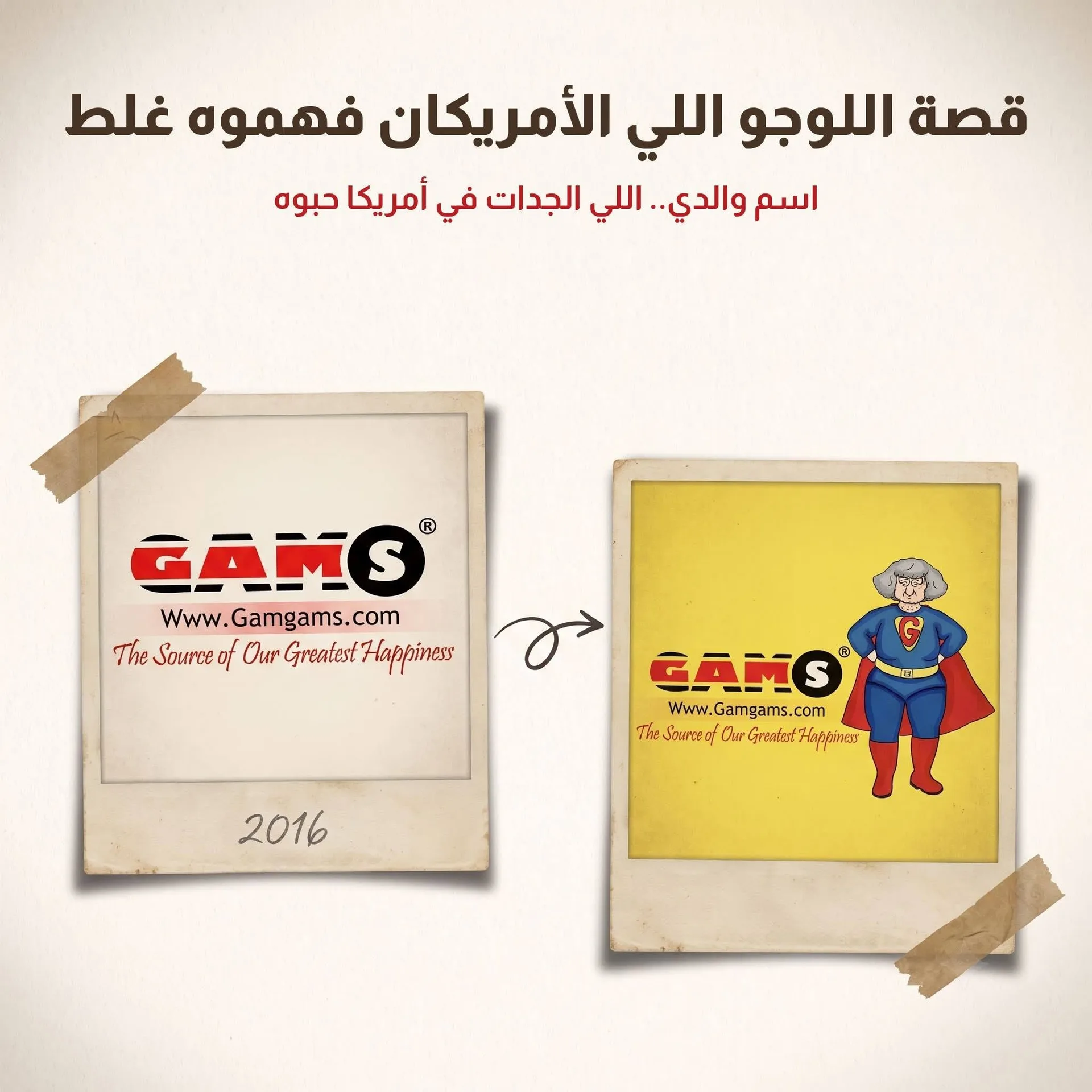
Rabeea tells the story of launching an American-market e-commerce store roughly ten years ago, and picking a name inspired by his father: GAMGAMS. The twist: the vast majority of buyers turned out to be American women over sixty. The reason was purely linguistic — in American colloquial English, the phrase is used to address a grandmother.
His decision is the substance of the lesson. He did not change the name and he did not shutter the store. He rebuilt it entirely around children's toys and grandkid gifts, and redesigned the visual identity around a "Super Grandma" figure. He read the market data as a strategic signal, not as an error to be corrected.
The rule he extracts today and offers to young founders: "Do not sell a product. Understand the human in front of you — her culture, what moves her."
The Architecture: A Three-Layer Ecosystem
Layer one — NASEY®: the software house
Website design, iOS and Android apps, e-commerce and multi-vendor platforms, ERP and accounting systems, SaaS products, hosting and VPS servers, domains and SSL certificates, plus digital marketing and SEO. The company reports serving clients in more than fifteen countries — including Saudi Arabia, the UAE, Kuwait, Oman, Jordan, Iraq, Libya, the United States, Canada, Australia, and Germany — with total monthly sales across client stores exceeding twelve million dollars.
Layer two — Buy.com.eg: the marketplace layer
The platform describes itself as Egypt's first "super-app" combining a business directory, an e-commerce marketplace, and business subscriptions in a single interface. Reported numbers: over 209,000 users, 16,000 businesses, 210 e-commerce stores, across all 27 governorates. Whoever sells stores earns once. Whoever builds a marketplace earns on every transaction inside it.
Layer three — enablement and income generation
The Buy Egypt affiliate program gives any young Egyptian a smart link and a commission that scales from 5% to 8% across four tiers — with no subscription fee and no minimum sales threshold. This is not a marketing feature. It is an economic distribution model in a country where 70% of the population is under thirty-five.
The Unusual Policy: A Founder Who Meets Every NASEY Client
In an era where human contact has been swapped for ticketing systems and bots, Rabeea maintains a policy that looks entirely unscalable: a personal interview with every prospective custom-software client at NASEY, conducted by him personally, before any collaboration begins. The company notes that many founders leave those meetings meaningfully better off — even when they don't sign.
But the point worth noting is that this policy applies to NASEY specifically — high-value bespoke software work. Buy Egypt operates on the exact opposite logic: full self-service registration in minutes with no intermediary, because it is a standardized product served through a self-serve experience, not a personal consultation. Keeping the two paths separate is a foundational design decision in the ecosystem.
Economically, holding on to the personal interview inside NASEY is a calculated choice, not a luxury. In high-value custom projects, trust — not price, not technology — is the real obstacle to the first large contract. The founder interview is, in business terms, a machine for lowering customer acquisition cost and raising repeat-contract rates. Buy Egypt lowers acquisition cost through the opposite move: removing the human intermediary altogether.
Why This Profile Matters Beyond Egypt
Egypt is a market of roughly 105 million people, with over 72 million internet users, 58 million on social media, and an e-commerce market exceeding twelve billion dollars growing at roughly 28% annually — at operating costs around half those of the Gulf.
In that context, the Rabeea experience acquires a wider significance. It is a test case for the hypothesis that the next generation of software hubs will not necessarily live in capital cities, and that remote work has opened the door not just for individuals but for entire second-tier cities. Mansoura is not an exception. It is a sample.
The Takeaway
The Mohamed Rabeea story is not a "from zero to a million" narrative — that literary genre has become tired and suspect. It is something more thought-provoking: how loss becomes a management method, how a linguistic accident becomes a market strategy, and how a peripheral city becomes an export node.
Behind every line of code that ships from NASEY, and every order that leaves Buy.com.eg, stands a sentence spoken by a man who never watched his son grow up: "I am leaving Mohamed with you." And perhaps that is the one lesson in this entire file that cannot be replicated: the strongest brands are built on things you cannot buy.


Comments(0)