
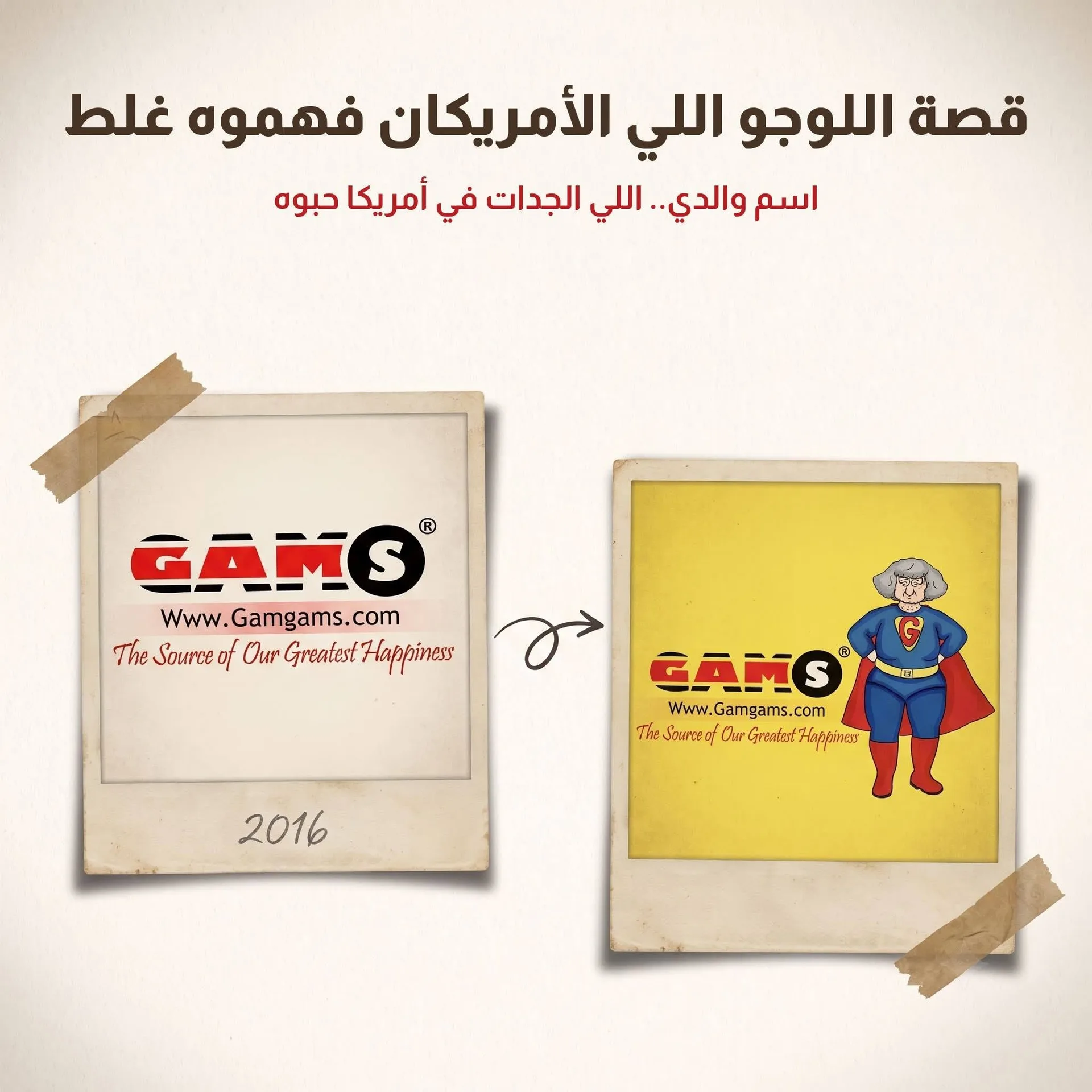
There are stories we tell because they make us look brilliant. And there are stories we insist on telling because they remind us that we were not — and will never be — brilliant. The GAMGAMS story is the second kind.
The Start: An Emotional Decision
About ten years ago, I launched an e-commerce store aimed at the American market. I picked a name with deep personal meaning: GAMGAMS, drawn from the name of my father Gamal — the father I never saw, who died when I was four months old.
I did not consult a single American on the name. I did not run any check of the word in colloquial usage. I assumed the name "sounded nice," would be intelligible to any consumer, and would succeed because it carried a story. I was wrong on two of those three assumptions. The only correct one — that the story would matter — was correct in a way I did not anticipate.
The Data Started Talking
Over the first few months, sales came in slowly but steadily. When I opened the customer analytics, I stopped. The overwhelming majority of buyers were American women over sixty. Not the demographic I had targeted (young adults 25–35). Not the gender split I had planned (roughly balanced). The data looked like no version of my plan.
When I finally spoke with an early customer through support, she asked me politely: "You're not American, are you?" I said no, Egyptian — why? She laughed. "Because 'gam gam' is what we call our grandmother. I assumed the store was for grandmothers, so I've been buying gifts here for my grandchildren."
The Decision Point
I stood in front of two clear options.
Option one: correct the name. Rebrand the store to something more "professional" and re-target the original demographic. That would require an announcement campaign to existing customers, and possibly the loss of the brand equity that had begun to form.
Option two: accept what the market said. If grandmothers were the buyers, why fight them? Re-orient the store completely to serve that exact segment.
I chose the second, and it was psychologically the harder call. It meant admitting I had built a store for a completely different audience than the one I had imagined. But it was the smarter economic decision.
What Happened After the Pivot
I rewrote the entire catalog: children's toys, gifts for grandkids, "from grandma to..." cards, family memory products. I changed the logo to a "Super Grandma" — an older woman with grey hair and a Superman-style cape. I rewrote the site's language to speak to "loving grandmothers." Everything shifted to align with who was actually buying.
The result: sales tripled in six months. Grandmothers were not just buying in volume; they were recommending the store to their friends, writing long reviews, and returning for every gifting occasion. The storefront transformed from "a general product" into "a community."
The Lesson I Built Twenty Years On
The market never misunderstands you. You misunderstand yourself.
When the market behaves in ways you didn't predict, you have two options: resist it (and lose), or learn from it (and win). The rule I extracted from that experience, and applied to every project since:
1. Listen to the data, not to your first plan
The first plan is built on assumptions. The data is built on reality. When the two conflict, the data always wins.
2. The audience that showed up is more valuable than the one you imagined
The customer who actually paid deserves all your effort, even if she is not who you planned for. The customer you imagined but never came does not deserve you sacrificing the one who did.
3. Flexibility is a competitive edge
Rigid companies resist change. Smart companies change fast. In digital markets, speed of adaptation beats precision of initial planning.
4. Cultural fluency cannot be bought after the fact
Had I hired a cultural consultant early on, they would have told me what the word meant before I launched. But the lesson I paid for out of my own pocket sank deeper than any consultancy fee would have. Sometimes the fine matters more than the warning.
How I Applied This at Buy Egypt
When we built Buy Egypt, we did not decide in advance which sectors would grow. We launched the platform open to all, then watched. Which sector was attracting the most merchants? Which category had the highest conversion? Which geography was growing unexpectedly? Then we invested behind the trends we observed in the field, not the ones we projected on paper.
The result of that philosophy: Buy Egypt grew faster because it followed the market instead of trying to lead it. And when we introduce a new feature today, it comes from an observed demand — not from a founder's guess.
The Takeaway
If you are a new founder, the first rule I would offer after twenty years of practice: do not sell a product. Understand the human across from you — her culture, what moves her — first. Then be ready to change everything — the name, the product, the audience, the language — if the market tells you that you built something different from what you planned.
Sticking to the original plan in the face of contradicting data is not perseverance. It is stubbornness, and it costs companies everything. Intelligent flexibility is not weakness. It is the primary competitive edge in any emerging market.



Comments(0)